Selling a Fueling Station Property?

In October 2011 the Georgia Petroleum Marketer presented an article that discussed the sale of properties that involve an active or former fueling station.  The focus then was to illustrate the potential risks and how to manage the environmental liability from a prospective buyer’s viewpoint.  Members of the Georgia Oilmen’s Association (GOA) may more often find themselves trying to sell a property that involves an active or former fueling system, and this article will focus on the environmental risks involved with selling such a property.
 
Finding a buyer for a property that involves an active or former fueling station has become a difficult proposition with the uncertainty of profit margins, regulatory burden, and the strict requirements from lending institutions.  These factors have combined with an uncertain commercial real estate market to increase the numbers of these properties on the market at a time when there are fewer potential buyers.  Georgia Oilmen’s Services, Inc. (GOS) has advised both potential buyers and sellers of these types of properties, and many of the same concerns regularly arise. 
 
As a seller of a retail fueling property, you should be prepared to provide copies of all fueling system registration and compliance documents to a potential buyer.  This would include copies of all fueling system compliance testing results for the past several years, especially the most recent results.  If the fueling system has been recently inspected by the Underground Storage Tank Management Program (USTMP), copies should be maintained of the inspection reports, additional requirements, citations, and USTMP letters stating that any problems have been satisfactorily resolved.  Records of underground storage tank (UST) system maintenance, repairs and equipment upgrades should also be maintained, in addition to records of invoices showing payment of environmental assurance fees.  Attorneys and lenders working with prospective buyers are increasingly requiring these types of documentation to be reviewed before moving forward with a property transaction.
 
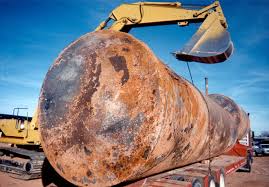
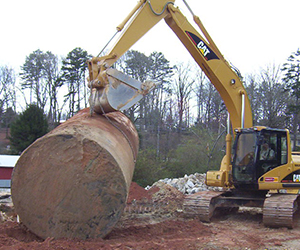
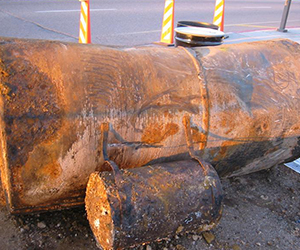
With many retail fueling properties, the store has been temporarily closed and the UST system has been out of use for some period of time before the property comes onto the market.  If a fueling system is going to be out of use for any period of time, the USTs must be immediately registered with the USTMP as Temporarily Out of Use (TOU).  Additionally, you must keep all compliance measures in place and all testing up to date or the USTs must be permanently closed within 12 months.  Failure to properly register a UST system as TOU and properly maintain the compliance measures may put at risk the potential for fuel to be dispensed from the UST system in the future.  The USTMP may not easily allow the new owner to get a tank registration form unless a complete set of new compliance testing is performed.  The testing, repairs and upgrades that may be required to bring a fueling system into compliance may be too costly for a new owner to bear.  Additionally, if there is any significant gap in the fueling system compliance or payment of the environmental assurance fees, the USTMP may require that soil and groundwater testing be completed around the fueling system.  If the compliance measures are not maintained and the fueling system is rendered unusable, the value of the property may decrease.  Additionally, failure to properly maintain the compliance measures can jeopardize potential Georgia Underground Storage Tank (GUST) Trust Fund coverage. 
 
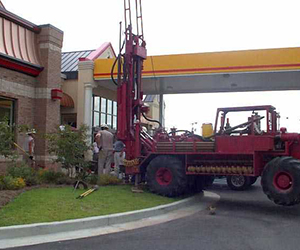
When advising a potential buyer of a property that currently has a fueling system on it, or has formerly contained USTs, GOS would recommend that a Phase II Environmental Site Assessment (ESA) be performed.  As a part of regular lending requirements, banks and other lending institutions are commonly requiring a Phase II ESA be completed at properties with current or former fueling systems.  As a seller of such a property, you should be prepared to pay for a Phase II as part of the property transaction.  A Phase II ESA is partially comprised of installation of soil borings to collect soil and groundwater samples.  Laboratory analysis of these samples would determine if soil and groundwater contamination is present, resulting from a release from the current or former UST system.  If a Phase II ESA documents that the property is not contaminated by a fuel release, the property owner can sell the property and retain no liability for any future environmental concerns.  However, if environmental contamination is discovered, a confirmed release is required to be reported by the tank and/or property owner to USTMP within 24 hours of the owner being notified of the confirmed release.  The USTMP would subsequently issue to the responsible party a request to complete corrective action measures.
 
GOS understands that the scenarios outlined herein are only a brief examination of the many concerns that may present themselves when attempting to sell a property with a fueling system.   Unfortunately, these complicated circumstances are full of potential pitfalls, and are an all too common part of doing business in today’s challenging economic times.  In some cases, lending institutions and lawyers need to be reeducated on these liabilities, none of which should terminally impair a potential property transaction.  A helpful tool when discussing these scenarios with lenders is to direct them to review the Code of Federal Regulations, 40 CFR Part 280, Subpart I, Lender Liability, which states the lender would not be held responsible for corrective action at a site if the institution acquired the site through or incident to foreclosure.  Please access the GOS website at www.georgiaoilmens.com for a downloadable copy of the referenced 40 CFR Part 280, Subpart I for your review.
 
If there is a business opportunity that you are evaluating that includes transaction of an environmentally impacted property, secure the information you need to properly weigh the potential risks versus the cost benefit.   GOS has successfully implemented corrective action activities at sites that have been sold and redeveloped, including full scale remediation, with no impediment to the new uses of the property.  None of these challenges are insurmountable.  Georgia Oilmen's Services, Inc. is able to assist you with analysis of your particular potential liabilities, and can recommend appropriate outside counsel if necessary.  Please call Kurt Hausner of GOS at 678 225-4558 with any questions, or if GOS can be of service. You can also contact us online.
Georgia Oilmen's Services | 11175 Spectrum, Bldg 2, Ste B | Lawrenceville, Georgia 30043 | Telephone: 678.225.4558 | Toll Free: 855.220.4998 | Fax: 678.225.4929